

Who is saved when saving everyone is impossible?
Reflections from the Future : 28 April 2026
G’day Friends,
In the modern world, when there is a crisis, we assume everyone will be saved. But what if they can't be? In disasters, earthquakes, floods and power failures, we instinctively expect systems to drop back into place, to restore order and protect everyone in equal measure. That assumption depends on abundance, enough time, enough resources, enough capacity for all outcomes to resolve cleanly. Under scarcity, that logic breaks. Recovery becomes selection. And once that happens, a quieter question emerges underneath the noise of emergency: who decides who remains safe, and how are those decisions made?
Scarcity is not just material, it is structural. It doesn’t only appear when there is less food, less water, or less space, it emerges whenever a system can no longer carry all its obligations at once. Under pressure, systems do not simply weaken, they begin to prioritise. Every system under strain becomes a triage system, whether it is designed to or not. What changes first is not capability, but selection.
At that point, decisions are never neutral. They encode values, assumptions, and hierarchy, even when no one explicitly states them. The first priority is clean water. Without water people start dying in days. Without water, nothing else matters. Who is classified as essential, who is moved first, who is left waiting, all of it reflects judgments that are usually embedded long before the crisis arrives. “Fairness” becomes impossible when outcomes cannot be equal, because equality assumes sufficient capacity for everyone to be treated the same way.
In practice, responsibility is often hidden inside procedure rather than held by a person. Forms, rules, protocols and systems distribute decision-making so widely that no single actor appears accountable. This creates the appearance of objectivity, but it is still judgement, only displaced. The illusion of systems is that they remove human decision-making under pressure, but they do not. They relocate it, fragment it, and make it harder to see.
What emerges is not the absence of choice, but the invisibility of it. And when systems are under enough strain, that invisibility becomes its own kind of power.
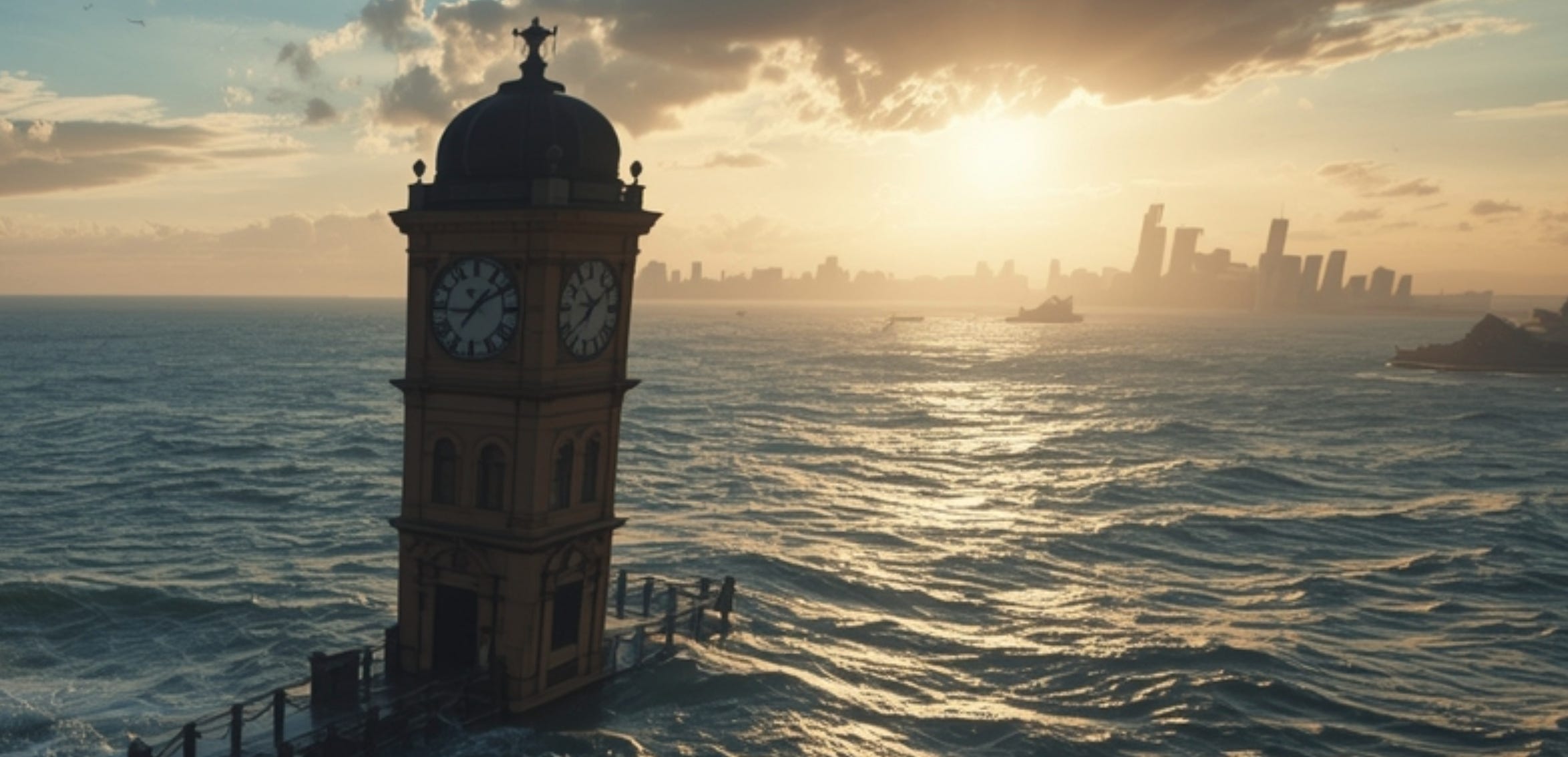
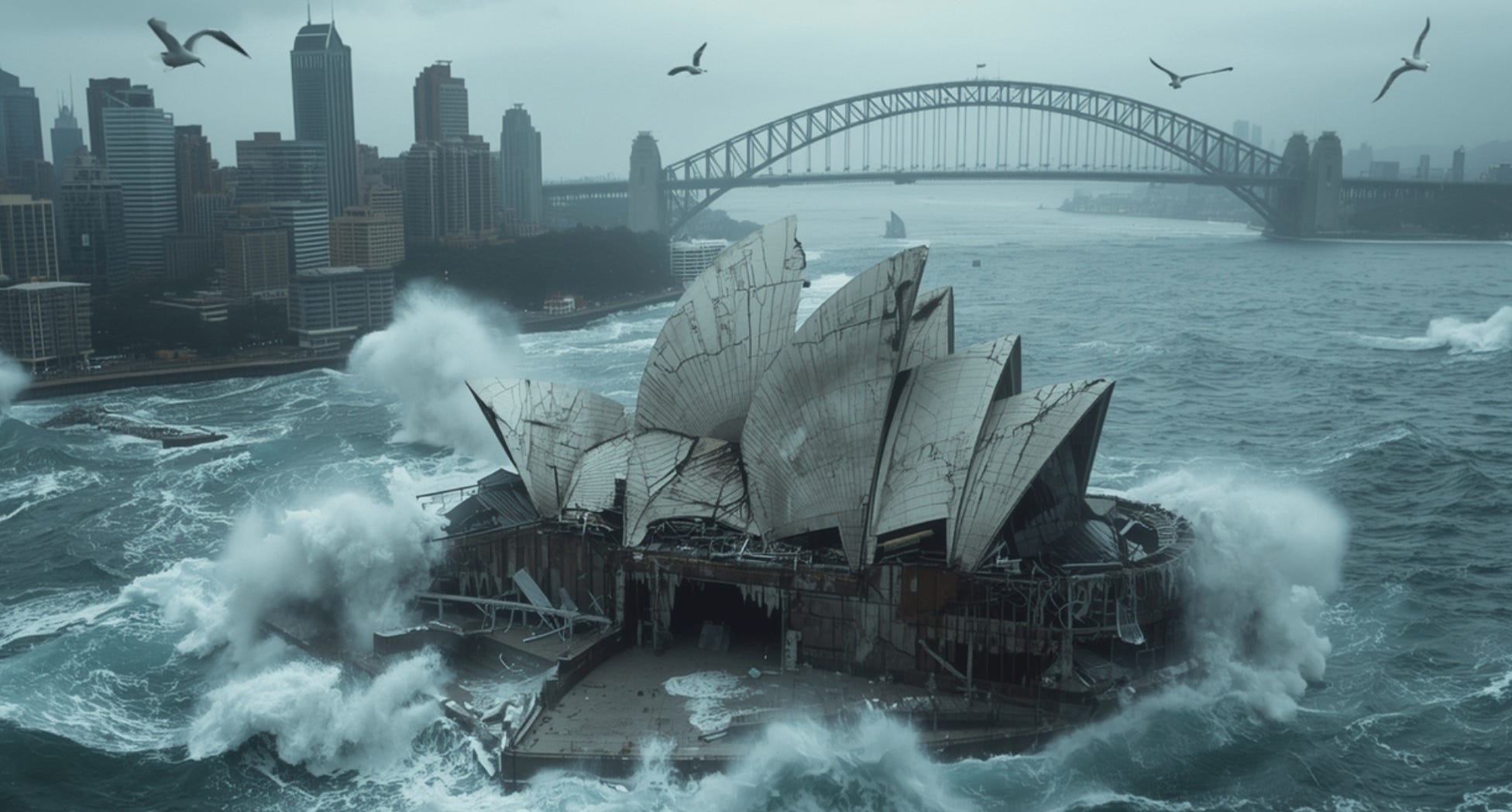
In the Sidni world, as the waters rise, people are evacuated from cities and moved into temporary camps. At first there is urgency, then coordination, then exhaustion. After a few days, there is no one left to save, and the cities are abandoned, not destroyed in a single moment, but emptied through a sequence of decisions that feel necessary at the time.
Some towns survive longer if they can secure fresh water. Water, food and power become the organising principle of everything that remains. The first priority is to feed the soldiers and keep the systems running, because they are responsible for maintaining order and operating the droids and infrastructure that are meant to save everyone else. Without them, nothing else functions at scale.
Within the camps, families are the safest unit. Anyone alone becomes immediately vulnerable, forced to seek protection or risk death. But as stability weakens, new forms of power emerge. Groups of men, whether bikies, police units, gangs, or even football teams, become dominant because coordination itself becomes a survival advantage. Strength is no longer just physical, it is structural.
Eventually, resources begin to run out. Fuel, food, clean water, maintenance capacity. Soldiers can no longer keep the camps functioning at the same level, and their authority starts to fracture under the weight of logistics rather than conflict. Systems that were designed to scale protection begin to fail.
And when that happens, the question is no longer just how people are saved, but what kind of order replaces the one that collapses.
Moral values do not disappear in chaos, they become rare, uneven, and harder to sustain as different kinds of leaders emerge under pressure. Some are guided by care, others by protocol, others by force or opportunity, and each operates with a different definition of what “necessary” means. The hardest truth is that in prolonged instability, the strongest and most ruthless often prevail, not because they are right, but because they are able to control resources.
The question becomes unavoidable: what is your plan to survive if help doesn’t come?
Author Store. Fancy a signed paperback or an Ebook? Take a look:
Sofi’s Journal is there as an eBook and its only US$0.99.
Amazon. The Song of Sidni is now free on Kindle Unlimited, and available to buy on Amazon for US$2.99 for a limited time, so the full story is still easy to access if you want to keep reading. Right here:
Pre-orders for Daughter’s Wrath are open, the next step in the saga.
Thank you for reading, supporting, and being part of this journey. It genuinely means a lot to see readers connecting with this future world.
Stay the course.
IR Clarke
P.S. Always love hearing from you—hit reply and say g’day anytime.
This is a reader supported publication. Please consider a monthly or annual Subscription. Subscribers will receive The Song of Sidni paperback (Australia), early chapters from Daughters’ Wrath AND a paperback in 2026. Plus maps, characters, and more!